Jacob Murphy’s Fulham Strike Shows Why Newcastle Still Need Him
- Toon Man
- 823 views
Murphy’s first goal of the season helped Newcastle earn a point at Fulham, underlining his value as a creator, defender and experienced voice.

Jacob Murphy’s curling strike at Craven Cottage arrived when Newcastle United needed a response. After consecutive defeats, the winger gave his side a lift with his first goal of the campaign, and his work across the flank helped Newcastle leave Fulham with a point. At 31, Murphy may not represent the club’s long-term plan, but his blend of experience, energy and end product still carries weight in a changing squad.

A career built on persistence
Born in Wembley on 24 February 1995 to parents with roots in north-east England, Murphy grew up a Newcastle supporter, visiting family in Gateshead. He and his twin brother Josh developed at Norwich City, where they won the FA Youth Cup in 2013. Jacob’s route into senior football took him through loan spells at Swindon, Southend, Blackpool, Scunthorpe and Colchester.
Coventry City proved a turning point. Murphy scored ten goals during a season-long stay in 2015-16, establishing himself as a direct attacking threat. Back at Norwich, he delivered a breakthrough campaign with close to double figures in both goals and assists. Newcastle brought him to St James’ Park in the summer of 2017 for a fee reported to be around £12 million.
His first seasons on Tyneside were uneven. Loans at West Bromwich Albion and Sheffield Wednesday interrupted his progress, while Newcastle themselves lacked direction. Murphy had to prove he could make a lasting impact as a wide player rather than simply move from one temporary role to another.
Howe found a role that fit
Eddie Howe’s arrival changed Murphy’s place in the side. He became a reliable wide operator whose pressing, crossing and recovery runs gave Newcastle balance, while his attacking contribution grew. The high point came in 2024-25: Murphy scored eight Premier League goals and supplied a dozen assists, placing him among the division’s most productive creators from the flank.
He also contributed at decisive moments in Newcastle’s Carabao Cup run, scoring in the semi-final against Arsenal and providing an important assist in the final. Newcastle went on to end a 70-year wait for a major domestic trophy. For a player often viewed as a useful squad option, that campaign made a strong case for his importance.
Murphy’s game has never depended on elaborate dribbling or polish for its own sake. He attacks space directly, can deliver with either foot and is willing to do the defensive work. His first-time crosses give Newcastle a quick route into the box; his left foot can also produce a fierce, bending shot from distance. Those qualities help teammates by stretching the pitch and giving attacks a dependable outlet.

A veteran presence in a changing squad
Newcastle have brought in younger players and seen senior figures depart, making Murphy’s experience useful beyond his individual output. He was left out of the formal leadership group under new head coach Matthias Jaissle, but has said his sense of responsibility is unchanged. He still wants to set standards and help younger teammates adjust to the demands of Premier League football.
This season has been less prolific than his 2024-25 surge, with minutes shared and goals slower to arrive. Even so, the case for Murphy rests on more than scoring. The view expressed here is that he offers greater dependability than Anthony Elanga and more experience than Matias Fernandez-Pardo. In a squad still finding its shape under Jaissle, those differences matter when Newcastle need a steady option on the wing.
The Craven Cottage reminder
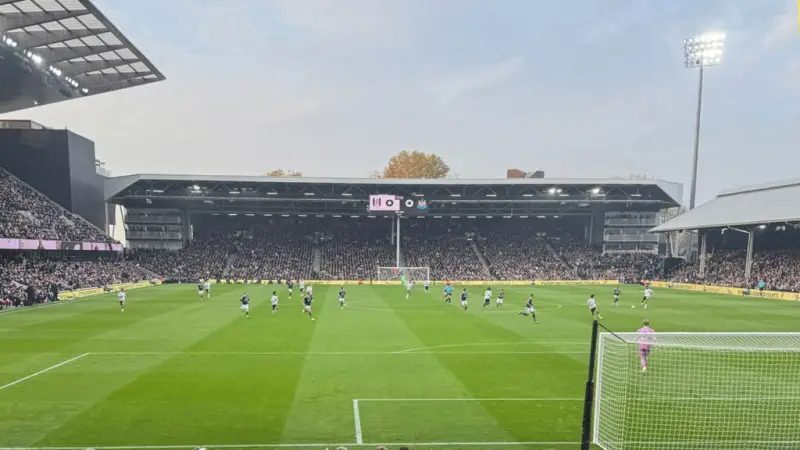
Newcastle arrived at Fulham after two straight defeats, and Murphy supplied the moment that changed the mood. He intercepted a loose pass, drove forward, cut inside and curled a left-footed shot into the net from 25 yards, leaving Bernd Leno with no chance. The goal was his first of the season and a reminder that he can still produce a decisive action from a game’s quieter passages.
Fulham equalised three minutes later, so Murphy’s strike didn’t secure a win. Newcastle nevertheless earned a point, with his individual quality and work rate part of the effort. Days earlier, he had assisted in a clean-sheet victory at Crystal Palace. That run of contributions fits his broader role: when the team needs a spark or more control out wide, he remains a player Howe’s successor can call on.
Murphy has also scored against Manchester City, hit a brace against Tottenham and played his part in European matches and Newcastle’s cup success. His career has been shaped by persistence rather than constant acclaim, and the club has already turned away interest from elsewhere while his contract situation is under discussion.
Newcastle will eventually need to strengthen the position with a player who offers more long-term upside. For this season, though, Murphy’s crossing, defensive effort and experience make him hard to replace. His Fulham goal captured the point: he may not be Newcastle’s future, but he remains firmly part of the answer in the present.