Alphonso Davies’ Bayern Versatility Puts Barcelona Link in Focus
- Douwe de Vries
- 854 views
Davies scored from the left wing against Arsenal, underlining his value to Bayern as Barcelona’s reported interest depends on Alejandro Balde’s future.
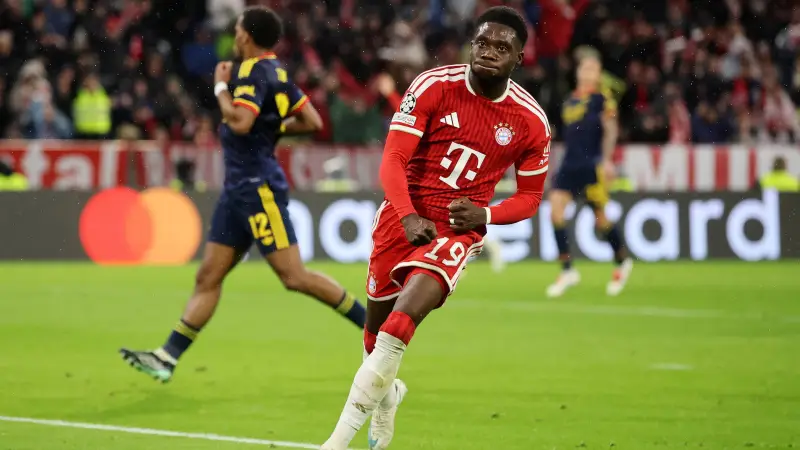
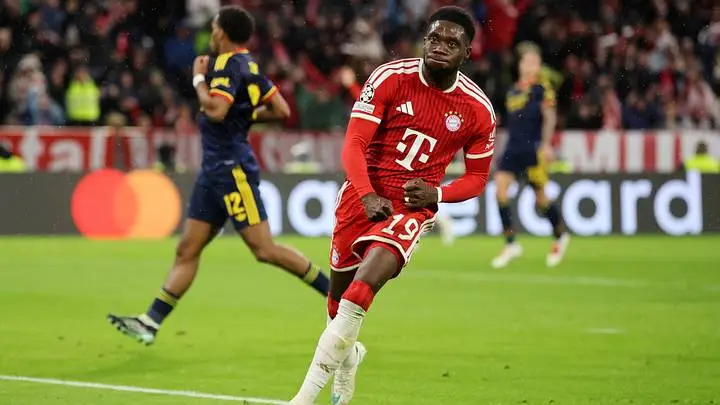
Alphonso Davies’ display against Arsenal offered a timely reminder of why Bayern Munich would be reluctant to lose him. Vincent Kompany used the Canadian on the left as an attacking winger, with Josip Stanišić alongside him, and Davies responded with the equaliser after Harry Kane threaded a pass through the defence. A player usually identified as a full-back became a direct threat in the final third, while still contributing across the pitch.
That range is the heart of the reported Barcelona interest. Hansi Flick, who established Davies in Bayern’s first team, is said to have the defender in mind if Alejandro Balde leaves Barcelona. It’s a contingent possibility, then: Balde’s departure would need to open the place, and Bayern would have to consider parting with a player whose ability to cover several roles gives Kompany tactical options.
A left-sided player who changes the shape
Davies’ match figures against Arsenal capture the attacking side of his performance: one goal, one key pass, three dribbles, 51 touches, five duels won and seven recoveries. Those numbers span more than one phase. He carried the ball at opponents and helped create an opening, but his recoveries also point to work without possession. From the wing, he could press higher and threaten the space behind Arsenal; his pace and defensive reach remain useful when Bayern need to protect the flank.
The role also reflects a broader strength. Davies has shown he can operate as a full-back, wing-back or winger, with each position asking for a different balance between advancing and covering. A conventional full-back often builds from deeper areas, while a winger starts closer to goal and is expected to take on defenders. Davies can move between those demands, giving Kompany the option to alter Bayern’s left-side structure without changing personnel.
His goal against Arsenal was the clearest moment, but the value lies in the combination of roles. Kane’s through ball gave Davies the chance to finish, and the Canadian’s movement from a wide starting position made the opportunity count. Bayern have a player who can add numbers to an attack and still recover quickly enough to affect the defensive phase. That kind of flexibility can be difficult to replace with a like-for-like full-back.
Barcelona’s interest hinges on Balde
Barcelona’s reported pursuit is tied to Balde’s situation rather than an open vacancy. Manchester United have shown concrete interest in the Spanish left-back, and ESPN has reported that the club wants to explore fresh negotiations in the January window. If Balde stays, the path for Davies appears narrower; if he leaves, Flick would have a familiar option in mind. The sequence matters because Barcelona’s interest, as reported, depends on a departure first.
Flick knows Davies from their time together at Bayern, where the coach helped bring him into the first team. That familiarity may explain the attraction: Davies already understands the demands of Flick’s approach, and his ability to play higher up the flank could give Barcelona another way to build attacks from the left. Still, a reported preference is only one part of a potential move. Bayern would need to be willing to negotiate, and Barcelona would have to find a deal that fits the club’s means.
Davies has made 259 appearances for Bayern and scored 17 goals. Those totals reinforce how long he has been part of the club’s plans, while his latest performance showed the range he can offer in a different position. Real Madrid pursued him strongly in 2024 and 2025 with the hope of signing him on a free transfer, but Davies instead extended his contract in Munich. Manchester United, Liverpool and Paris Saint-Germain have also been linked with attempts to prise him away.
Bayern’s choice is about depth as well as value
Recent reports have suggested Bayern officials want to sell Davies, while Kompany is reluctant to lose a key contributor at both ends of the pitch. The coach’s position is understandable: a player who can shift between the back line and attack gives him cover for injuries, tactical adjustments and different match states. Stanišić is an option on the left, but the assessment in Munich is that he does not match Davies’ versatility, and the club’s younger prospects are not yet ready to take over.
There is also a financial obstacle. Davies’ reported market value is €42 million, and his wages would make a Barcelona deal difficult to complete. Any move would involve more than identifying a replacement or agreeing on a fee: Bayern would need confidence that the squad could absorb the loss, while Barcelona would need a workable route to bring him in. The reported interest remains conditional, and the figures underline why it would be a demanding negotiation.
For now, Davies’ Arsenal performance sharpens the debate around his future without settling it. Bayern can point to a player who scored from the wing, created a key pass and contributed seven recoveries; Barcelona can see a familiar, adaptable option if Balde departs. The next meaningful turn is likely to come from Balde’s future and Bayern’s willingness to discuss Davies. Until then, Kompany has a left-sided player whose ability to change roles remains a valuable part of his squad.