Herbert Hainer Backs Jonas Urbig as Bayern Munich’s Future No. 1
- Kiran Thakare
- 529 views
Hainer has publicly backed Urbig despite recent scrutiny, pointing to the 23-year-old’s progress and Bayern’s confidence in his long-term potential.
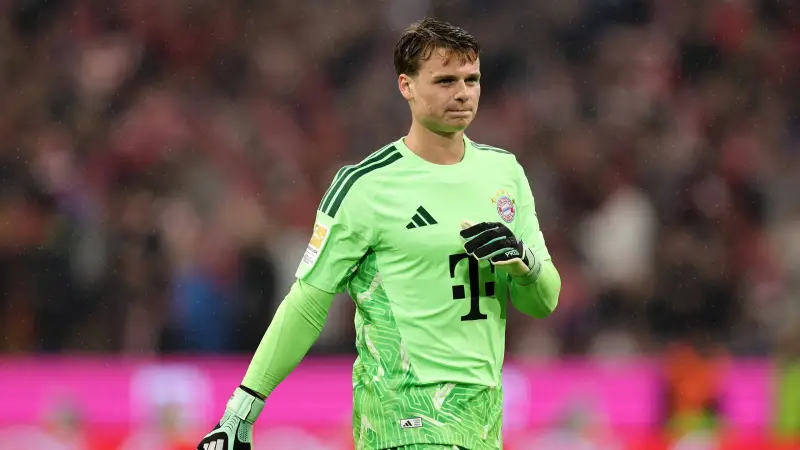
Jonas Urbig’s path to becoming Bayern Munich’s first-choice goalkeeper is still under scrutiny, but club president Herbert Hainer has made the club’s position clear: Bayern believe the 23-year-old can succeed Manuel Neuer. That support matters after a difficult run of discussion around the position and criticism of Urbig’s latest appearances.
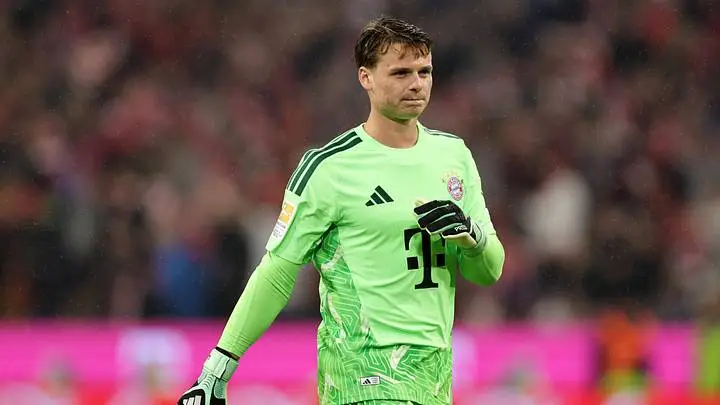
Neuer’s errors against Augsburg prompted questions about his form and place in the starting XI. Urbig then started against Viking and RB Leipzig, conceding in both matches and drawing criticism in the media. Those results have sharpened attention on his readiness, even as Bayern’s leadership continues to frame his development as part of a longer plan.
Hainer points to progress and character
Speaking to SportBild, as relayed by iMiaSanMia, Hainer defended the goalkeeper’s progress and the work behind it. He said Urbig arrived from the second division as a very young player, has since established himself as Bayern’s future No. 1 and has already made his first international appearances. Hainer also credited the club’s sporting management for guiding that rise.
“He has exactly the blend of qualities needed at FC Bayern: talent, personality and the determination to keep learning every day.”
Herbert Hainer
That endorsement puts the emphasis on a goalkeeper’s development rather than a short stretch of results. Clean sheets are an obvious measure, but they don’t tell the whole story of a young keeper’s performance. Bayern also need Urbig to handle the decisions that shape their build-up, command his area and respond calmly when mistakes or goals against draw attention. The available account describes him as assured in shot-stopping and when playing out from the back, two areas that fit the demands of a side expected to control possession.
A longer audition than most successors received
Bayern have tried several routes to plan for life after Neuer. Daniel Peretz and Alexander Nübel arrived as younger options, while Yann Sommer brought experience during a period when Neuer was dealing with serious injury problems. Nübel and Peretz did not persuade the club’s coaches and decision-makers to give them an extended first-team run. Sommer performed well as the starter, but left Bavaria after Neuer regained fitness.
Urbig’s case differs because he has already had a substantial opportunity to play for Bayern while Neuer remains the established No. 1. He joined from FC Köln at the start of 2025 and has made 36 appearances in 18 months. That record gives the club more to assess than a handful of emergency starts, though it still doesn’t remove the pressure that comes with eventually taking over from one of Bayern’s defining players.
His early appearances were described as confident, with performances that have been largely stable rather than spectacular. That distinction is central to the debate: Bayern appear to see a reliable base and room to grow, while critics can point to the absence of clean sheets in the Viking and Leipzig matches. The two readings can coexist. A goalkeeper can show the tools for a future role and still have difficult spells as he adjusts to the scrutiny and demands of Bayern’s first team.
The next step is handling expectation
At 23, Urbig is young for a goalkeeper, a position in which experience and judgment often develop over time. Bayern’s backing suggests they are prepared to assess him across a broader stretch, rather than treat every goal conceded as a verdict on his long-term prospects. That approach will matter if he is to gain confidence while competing in a squad where the No. 1 role carries an unusually high standard.
Former Bayern CEO Oliver Kahn has voiced uncertainty about whether Urbig is ready to bear the responsibility of becoming the club’s long-term first choice. He has acknowledged Urbig’s good performances while questioning whether the young keeper can yet carry that burden. Hainer’s comments answer that doubt with a vote of confidence in Urbig’s qualities and learning mindset, though the starting role remains Neuer’s for now.
The club’s challenge is to turn that faith into a measured transition. Urbig has shown enough to remain a serious successor, particularly through his 36 appearances and his work with the ball and in front of goal. The scrutiny after Viking and Leipzig is part of that assessment, not a conclusion. For Bayern, the clearest next indicator will be whether he can maintain his composure and consistency whenever the team calls on him.