Newcastle United’s Stadium Ambition Must Match Its Plans for the Team
- Peter Scraton
- 946 views
Newcastle’s stadium and training ground plans promise growth, but the club must keep the squad competitive throughout years of development.

Newcastle United’s infrastructure plans will mean little if the team loses its edge while they take shape. Stadium expansion and a new training complex could support lasting growth, but the club’s central test is to keep building a side worthy of those ambitions.

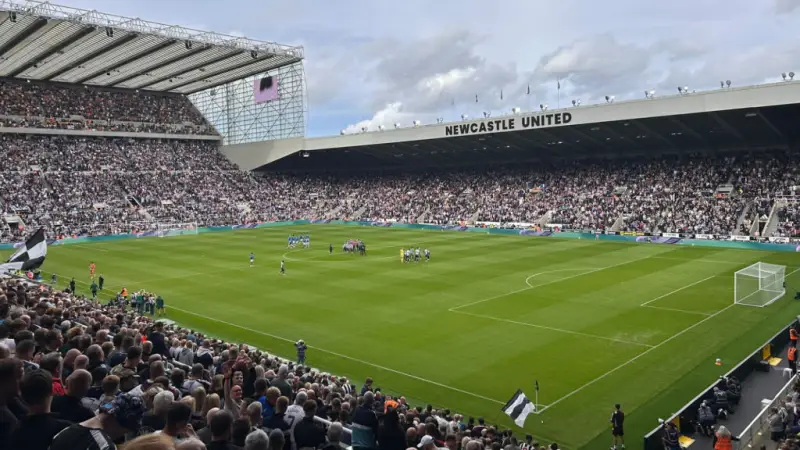
The Fan Advisory Board’s latest published notes say the club has authorised further work to assess two stadium options: redeveloping St James’ Park or building a new ground. They also record an expected planning application for the proposed Woolsington training complex in the second quarter of 2027. Each project has a long horizon. The squad has to remain competitive through every stage.
Facilities can support success, but they can’t guarantee it
More capacity could bring supporters currently unable to get tickets into the ground. Better accessibility and facilities would improve the matchday experience, while greater commercial income could help sustain a stronger squad. The proposed £190 million Woolsington scheme, with facilities for the men’s first team and academy, has a direct connection to player preparation and the development of young talent.
There’s a strong case for investing. The risk lies in treating construction as a measure of progress in itself. A club can unveil designs and complete buildings while its football declines. A stadium project may run for a decade; recruitment errors, injuries or the loss of key players can undermine a team within a season. Supporters still have to live through every match in between.
Newcastle’s history offers a warning, though not a simple cause-and-effect story. The East Stand opened at St James’ Park in 1973 and brought a significant improvement to the ground. The wider redevelopment planned at the time never followed: recession badly damaged the club’s finances, leaving the East Stand as the only completed phase. Plans to rebuild the Leazes End were later scuppered by relegation in 1978.
Between those events, Newcastle reached the FA Cup final in 1974 and the League Cup final in 1976. Relegation came in 1978, followed by six years before promotion in 1984. The East Stand didn’t cause the club’s decline. The more useful lesson is that new facilities offer no shelter from poor football, and a club’s circumstances can change enough to unsettle its grandest plans.
Plan for the years between approval and completion
That means the board needs a credible football plan alongside its construction plans. Supporters should be able to trust that squad needs have been assessed, recruitment has clear leadership and the club can respond when results turn against expectations. Cancelling a building project wouldn’t automatically free an identical sum for transfers: financing and football spending rules complicate that relationship. But that complexity makes clear explanations more necessary, not less.
The club should also test its plans against difficult scenarios. What if costs rise or a project is delayed? What if European income doesn’t arrive, or results fall well below expectations? A long-term vision has to withstand outcomes less favourable than the best case. Otherwise, the team may end up carrying the cost of assumptions that no longer hold.
There’s a Newcastle example of development and football progress moving together. In the 1990s, St James’ Park was redeveloped during an extraordinary revival under Kevin Keegan and Sir John Hall. The ground grew as the team gave supporters new reasons to believe. That partnership—ambition in the stands matched by ambition on the pitch—is the standard the club should pursue again.
The team gives the ground its meaning
Supporters can value higher income, better hospitality and outstanding training facilities while still judging the club by what happens on the pitch. The memories that bind people to a ground come from football: a goal that sends strangers into each other’s arms, a player who lifts the crowd, or a team that finds another gear because the stadium drives it on. Taking a child to a match and sharing an experience that lasts is part of that connection too.
St James’ Park carries the weight of generations of those memories. Redevelopment would need to respect that bond; a new stadium would have to earn it. Bigger projects are easy to show and celebrate through designs, milestones and photographs. Building a consistent team is less visible work. It depends on sound judgement, patience, recruitment and the willingness to correct mistakes.
Newcastle should think big: give more supporters the chance to attend, provide the first team and academy with excellent facilities, and build for the next generation. But the team must keep pace with the plans. Pursue the stadium options and develop Woolsington, while making sure the football remains strong enough to fill those places with purpose.