Harry Kane Could End Bayern Munich’s 46-Year Ballon d’Or Wait
- Tuan Duy Luong
- 744 views
Bayern’s award history runs from Beckenbauer to Lewandowski’s near misses. Harry Kane now has a chance to end the club’s long wait.
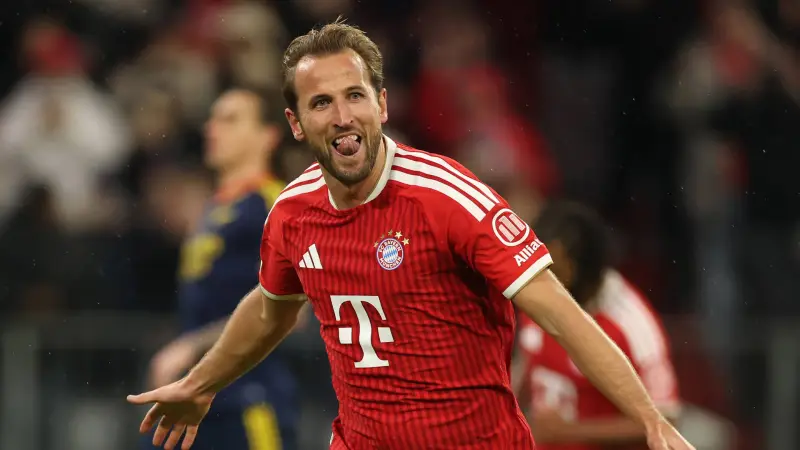
Harry Kane’s place among the leading contenders for the 2026 Ballon d’Or gives Bayern Munich a chance to close a gap that has lasted since Karl-Heinz Rummenigge’s second win in 1981. The club has collected five awards, all in the 1970s and early 1980s, but its modern stars have repeatedly come close without taking the prize. Kane’s opportunity carries that history with it.
Bayern’s first serious contender was Franz Beckenbauer, who finished in the top three in 1966. Bobby Charlton took the award after winning the World Cup with England that year, leaving Beckenbauer just short. Four years later, Gerd Müller became Bayern’s first winner on the strength of a remarkable scoring season: 38 Bundesliga goals and 10 at the World Cup, where he also finished as top scorer.
A dominant era in Munich
The club’s strongest run at the award arrived through the partnership of Müller and Beckenbauer. Beckenbauer won in 1972 after captaining West Germany to the European Championship and redefining the libero role. Müller finished second that year. In 1976, Beckenbauer claimed a second award after Bayern secured its third consecutive European Cup. He remains the only defender to have won the Ballon d’Or twice.
Together, Müller and Beckenbauer registered nine top-three finishes. Their success reflected two distinct routes to individual recognition: Müller’s output in front of goal and Beckenbauer’s influence across the team. Bayern’s history at the award was built on players whose impact could be seen both in individual numbers and in major team achievements.
Karl-Heinz Rummenigge extended that run as Bayern and West Germany’s attacking leader after Müller. He finished second in 1979, then won in 1980 and 1981. The European Championship triumph in 1980 was a defining part of his case for the first award. In 1981, Bayern defender Paul Breitner also finished second, giving the club another strong showing in the same year.
After Rummenigge, though, Bayern’s winners list stopped. Jürgen Klinsmann came closest before the end of the century, finishing runner-up to George Weah, the first African player to win the award. For a club that had produced several winners in little more than a decade, the long gap that followed became a striking part of its story.
Modern contenders, familiar frustration
Oliver Kahn brought Bayern back into the top three after the club won the Champions League in 2001 by beating Valencia on penalties. The goalkeeper was recognized among the leading players in both 2001 and 2002. His performances for Bayern, followed by Germany’s run to the 2002 World Cup final, put him in contention, but neither appearance ended the club’s wait.
Franck Ribéry’s 2013 season offered another compelling case. Bayern won the treble under Jupp Heynckes, and Ribéry recorded 41 goal contributions for club and country. He finished third, behind Cristiano Ronaldo, by a margin of less than five percent. The narrow gap made the result especially painful for Bayern supporters: the club had conquered Europe, and its leading attacker had played a central part, yet the individual prize went elsewhere.
Manuel Neuer faced a similar outcome in 2014. He helped Germany win the World Cup and received the Golden Glove, while his expansive role for Bayern helped shape expectations of the modern sweeper-keeper. Neuer finished third. Ribéry and Neuer represented very different positions and responsibilities, but both left Bayern fans asking how much weight individual recognition gives to team success and influence beyond goals.
Robert Lewandowski’s near misses remain the clearest modern example of that tension. He led Bayern’s attack during the club’s six-trophy year in 2020, but the award was cancelled because of COVID-19. A year later, he broke Gerd Müller’s record for Bundesliga goals in a season and still finished behind Lionel Messi. For Bayern, the lost opportunity was magnified by the sense that Lewandowski had produced the kind of season the award is meant to recognize.
Sadio Mané finished second in the 2023 edition while at Bayern, but much of the performance behind his standing came during his time at Liverpool. His result therefore did little to satisfy the club’s desire for a winner whose case was built primarily on work in Munich.
Kane carries the latest chance
That history shapes the attention around Kane. Bayern have faced criticism in recent years over how effectively their stars are presented in the race for individual honours. Lewandowski’s lost chances intensified that frustration, while the club’s earlier results showed that strong team seasons do not guarantee a Ballon d’Or winner. Kane now stands among the leading contenders, giving Bayern a chance to end a 46-year wait.
The club’s record offers a useful measure of the challenge: its winners were supported by standout individual displays, but their cases also landed alongside major achievements for their teams and countries. Kane’s pursuit is therefore about more than adding another name to Bayern’s honours list. If he wins, the club’s long modern absence ends; if he falls short, its history of near misses gains another chapter.