Bayern’s Injury Crisis Makes Jadon Sancho a Short-Term Option Worth Weighing
- Maximus Polek
- 646 views
With only three fit first-team attackers, Bayern could use Sancho’s wing versatility, though his recent form makes a short deal a calculated risk.
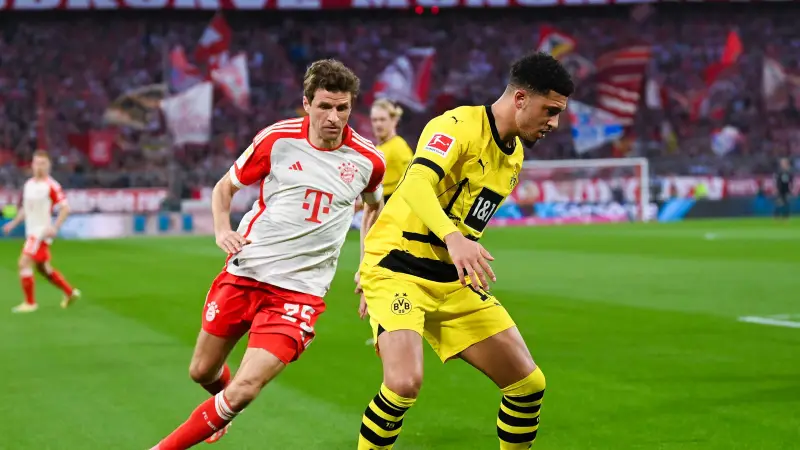
Bayern Munich’s attacking depth has narrowed to Harry Kane, Michael Olise and Lennart Karl, leaving little room for another setback. With several forwards unavailable and the January window still months away, Jadon Sancho stands out as a possible short-term addition: a 26-year-old with Bundesliga experience who can operate on either wing. The case for him rests on fit and timing; the case against him is his recent form and the uncertainty that would accompany a return.
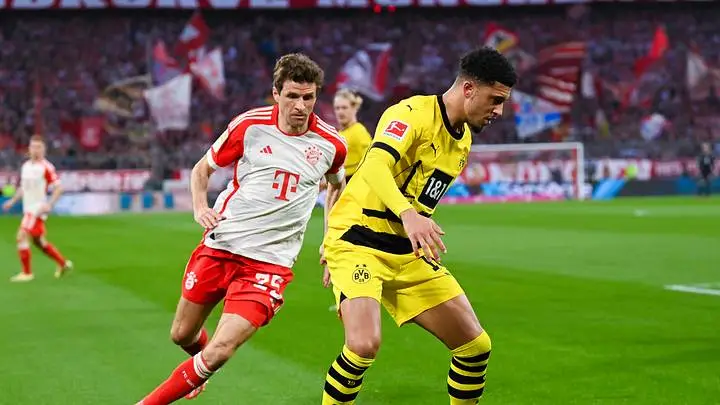
The shortage changes Bayern’s options
Ismael Saibari has undergone ankle surgery and is expected to miss three to four months. Serge Gnabry has aggravated a pre-season injury and is expected to be out for the rest of calendar year 2026. Luis Diaz and Jamal Musiala are expected back after the international break, but the possibility of either player aggravating an injury again leaves Bayern with limited cover in the meantime.
That matters because a thin forward group restricts a coach’s choices before a match even begins. Three fit first-team attackers can cover the starting roles, but offer little margin for rotation or an in-game change if someone is unavailable. Bayern’s immediate problem is therefore not simply replacing one absent player. It’s preserving enough options to keep the front line functional across a demanding run of matches while injured players work towards their returns.
Sancho would not remove that risk by himself, and the available information doesn’t establish when he could be ready to play. Still, a free-agent signing could give Bayern another senior option before January. The value of that move would depend on whether he can contribute quickly and whether the club could agree terms that make sense for a temporary need.
Why the Bundesliga setting could help
Sancho’s strongest spells have come in the Bundesliga with Borussia Dortmund. After struggling at Manchester United, he returned to Dortmund on loan in January of the 2023-24 season and found form again, helping the side reach the Champions League final. That history gives Bayern a reason to consider him: he has already shown that the league can suit his game, and he would not be learning a new competition from scratch.
His ability to play on either flank also offers practical flexibility. Bayern could use him as cover on the left or right, depending on who is fit and how the coach wants to shape the attack. That versatility may be useful when the available group is so small, since one player can provide an option across more than one position. It doesn’t establish that he would displace Olise or Karl, or that he could reproduce his earlier Dortmund form at Bayern. It does give the club a plausible way to add cover without waiting for a conventional transfer window.
The tactical value would depend on how Bayern intend to use him. A wide attacker can give the side another route to advance the ball and another option when its first-choice forwards need rest. But Sancho’s suitability would have to be judged against the demands of Bayern’s system, his current sharpness and his ability to settle into a squad during an injury emergency. Familiarity with the Bundesliga is a helpful starting point, not a guarantee.
A short deal limits the commitment
There is a clear reason for caution. Sancho endured some of the worst form of his career last season, and his earlier off-pitch difficulties add another uncertainty for a club weighing a signing. Bayern would need to decide whether his possible contribution outweighs the risk that he struggles to regain consistency. The shortage of attackers makes the potential reward more attractive, but it doesn’t erase the concerns.
A deal lasting only for the rest of the season would match the temporary nature of the problem more closely than a long commitment. It could give Bayern cover while the injured players recover, with the length and cost of the arrangement kept in view. That calculation still depends on Sancho’s wage demands and on whether both sides can agree terms. If those demands are too high, the short-term logic weakens quickly.
Bayern have been linked with Sancho before but haven’t completed a move. The current injury situation changes the context: the question is less whether he represents a perfect long-term solution and more whether his experience and wing coverage could help the squad through a difficult stretch. His Dortmund return offers some evidence of what he can provide in the right setting, while last season’s struggles show why the decision would carry risk.
With Kane, Olise and Karl currently the only fit first-team attackers, Bayern have little spare capacity up front. Sancho is a calculated option rather than a guaranteed fix. If the terms suit a temporary deal and the club believes he can contribute promptly, his ability to cover both wings may be valuable while the injured players work towards their returns. The next step is weighing that immediate cover against the uncertainty surrounding his form.