Bayern Munich Rank 17th in Decade-Long Transfer Spending Despite Trophy Haul
- Tuan Duy Luong
- 952 views
Bayern spent €1.14bn over the decade, ranking 17th, while combining selective recruitment with sustained success and a leaner squad.
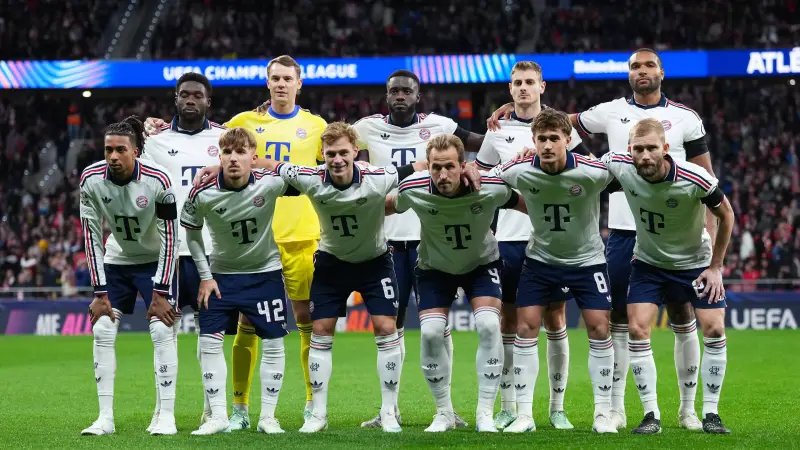
Bayern Munich’s 17th place in Transfermarkt’s decade-long spending table puts a striking figure on the club’s approach: €1.14 billion in transfer expenditure, below a long list of European rivals, yet alongside sustained domestic success and a Champions League title. The ranking reflects a deliberate preference for measured recruitment, though the limits of that model become clearer when injuries leave the first team short of options.
A spending table led by English clubs
The Premier League’s leading spenders dominate the top of the list. Chelsea, Manchester United, Manchester City, Tottenham, Arsenal and Liverpool all rank above Bayern, as does Paris Saint-Germain. Barcelona, Atletico Madrid and Real Madrid also spent more over the period covered.
Some of the other clubs ahead of Bayern make the gap more revealing. Aston Villa, Newcastle United and West Ham feature among the top 15, despite not carrying the same regular European profile as the continent’s biggest trophy winners. West Ham’s reported expenditure reached €1.23 billion, above Bayern’s €1.14 billion. Juventus and AC Milan are also among those to have spent heavily while struggling to recover their former standing in Europe.
Spending totals don’t explain a club’s performance on their own. They say little about sales, wages, contract costs or how well a squad fits a coach’s system. But the comparison does underline Bayern’s ability to compete near the summit without matching the outlay of several rivals. The club has won nine Bundesliga titles, one Champions League and a sextuple during the period described in the figures.
Recruitment built around value
Bayern’s transfer strategy has generally favoured players viewed as attainable value over headline purchases. Harry Kane, signed for €95 million, remains the club’s most expensive arrival, with no signing reaching the €100 million mark. That approach is associated with close financial oversight from the club’s leadership, including honorary president Uli Hoeness, who said in 2017 that “a €100 million player is unacceptable” for Bayern.
The policy’s other side is scouting and recruitment at lower cost. Michael Olise arrived for around €53 million, while Tom Bischof was persuaded to join on a free transfer after being identified as a promising German talent. Those deals illustrate the appeal of finding players before their price rises sharply or bringing them through the club’s development system.
Bayern also draw on academy graduates and young signings to support the senior squad. Lennart Karl, Aleksandar Pavlovic, Josip Stanisic and Jamal Musiala are cited as examples of players either promoted from the academy or brought in before turning 18. A steady stream of young contributors can help limit reliance on expensive arrivals, while giving the squad players who have developed within the club’s environment.
The approach also shapes decisions about age and resale value. Bayern have tended to be cautious about paying heavily for players near or past 30, even when they are performing at a high level. Kane is the notable exception: he joined after turning 30 and, as the source describes it, has delivered at the highest level, broken multiple records and won the Ballon d’Or.
Cost control cannot erase recruitment misses
Selective spending has not made Bayern immune to poor fits. Sadio Mané, João Palhinha, Leroy Sané and Lucas Hernández are named as signings who failed to meet expectations. Bayern’s response has often been to move players on quickly when a deal no longer looks right. Mané and Palhinha left after one season, while the departures of Sané and Hernández eased pressure on the wage bill.
That willingness to correct course can contain the cost of a mistake, but it comes with a squad-building trade-off. A club that avoids paying premium prices for depth has less room to absorb several absences at once. Transfer rankings cannot measure that vulnerability directly, yet Bayern’s current injury concerns make the issue visible.
Depth is the test ahead
Injuries to Luis Díaz, Alphonso Davies, Serge Gnabry and Ismaël Saibari have reduced Vincent Kompany’s attacking options, according to the account. That leaves the head coach with little room to reshuffle when players are unavailable. For a side expected to challenge for major honours, depth matters not only as insurance: it determines whether the team can maintain its intensity and tactical flexibility across a demanding run of fixtures.
Max Eberl had earlier described the squad as adequate and indicated that new signings would not be permitted. The injury situation sharpens the question of whether that assessment still holds. Bayern’s restraint has helped them remain competitive while spending less than many rivals, but a lean squad can turn an efficient financial model into a sporting constraint when absences accumulate.
The €1.14 billion total is therefore both a point of distinction and a challenge. Bayern have extracted a substantial return from their spending through titles, youth development and selective recruitment. The next test is whether that approach can provide enough cover for Kompany’s squad when the season’s demands rise and key players are unavailable.