2027 Gold Cup Switches to Two Groups of Eight, Adding a Fourth Match
- Paul Nicholson
- 780 views
The 16-team Gold Cup will use two groups of eight in 2027, giving each side four group matches before the top four advance.

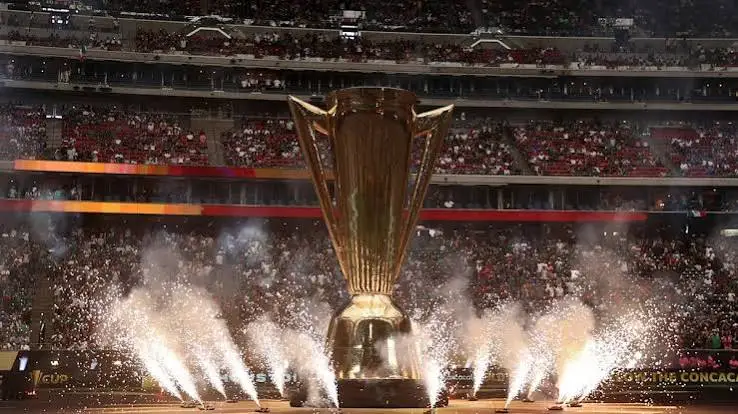
The 2027 Gold Cup will give every team an additional group-stage test and bring more cross-ranking matchups into the opening phase. Concacaf has replaced the tournament’s four groups of four with two groups of eight, while keeping the field at 16 teams.
The competition is scheduled for June 17 to July 11, with the draw set for April 8. Each team will play four group matches against four different opponents, up from three under the previous format. The top four finishers in each eight-team group will qualify for the quarter-finals, followed by semi-finals and the final.
A longer group stage changes the route to the knockout rounds
The new structure puts more weight on a team’s ability to sustain its level across several fixtures. Four matches against distinct opponents give the standings more room to shift, and leave less scope for a side to shape its entire group campaign around a single matchup. Every team will have to collect results across a broader set of tests before the top-four cutoff is settled.
Concacaf will distribute the 16 teams through eight pots, with two teams in each pot. Rankings determine the pots, and one team from every pot will be drawn into each group. Within each group, the teams will also be organized into four ranking bands. Each side then faces one opponent from each band, following a set fixture matrix.
That arrangement is intended to produce a balanced spread of opponents while allowing higher-ranked teams to meet earlier than a conventional small-group setup might. Concacaf president Victor Montagliani said the format would create “more opportunities” for leading teams in the region to play one another before the knockout rounds. He also said that teams would face a balanced mix of opponents as they compete for a place in the last eight.
The table will be the immediate measure of the format’s effect. With eight teams competing in each group and four places available in the quarter-finals, the margin for error will depend on how the fixture matrix distributes opponents and on how teams manage four matches. The format gives each side an extra chance to earn points, but also asks squads to maintain performance over a longer group stage.
Regional competition has expanded during Montagliani’s tenure
The Gold Cup change arrives amid a wider expansion of Concacaf competitions under Montagliani, who has led the confederation since 2016. The region has introduced the Nations League, enlarged the Champions Cup and established a broader women’s schedule that includes the W Gold Cup, W Champions Cup and a new W Nations League. Concacaf also helped deliver the first 48-team World Cup, staged across the US, Canada and Mexico this summer.
Commercial activity has grown alongside the calendar. Last month, Concacaf held its first Commercial Upfront for brands and agencies, presenting a schedule of nearly 2,000 matches. The confederation is also bringing partnership sales in-house after ending its agreement with Soccer United Marketing.
For the Gold Cup, the stated case for the format is more competitive fixtures and a greater chance of high-profile regional matchups arriving before the knockout stage. The expanded group stage also creates additional inventory for broadcasters and sponsors. Its sporting test will be whether the fixture plan produces meaningful table pressure throughout the groups, rather than concentrating the decisive moments at the end.
Qualification continues through the Nations League
Qualification for the 2027 Gold Cup continues this week, with four direct places available through the Nations League. The four quarter-final losers will have another route: they join the third- and fourth-place teams from the groups already played—Costa Rica, Dominican Republic, Honduras and Surinam—in a further chance to qualify. Saudi Arabia will take part in the Gold Cup as a guest nation.

Concacaf Nations League quarter-final schedule
Kickoff times listed in ET (local time).
First legs
- Thursday, November 12 — Curaçao vs Panama — Stadion Ergilio Hato, Willemstad, Curaçao — 19:00 (20:00)
- Friday, November 13 — Guatemala vs Canada — Estadio Manuel Felipe Carrera, Guatemala City, Guatemala — 21:00 (20:00)
- Saturday, November 14 — Haiti vs United States — Nu Stadium, Miami, FL — 16:30 (16:30)
- Saturday, November 14 — Jamaica vs Mexico — National Stadium, Kingston, Jamaica — 20:00 (20:00)
Second legs
- Sunday, November 15 — Panama vs Curaçao — Estadio Rommel Fernández, Panama City, Panama — 18:00 (18:00)
- Monday, November 16 — Canada vs Guatemala — BMO Field, Toronto, ON, Canada — 20:00 (20:00)
- Tuesday, November 17 — United States vs Haiti — TQL Stadium, Cincinnati, OH, USA — 19:00 (19:00)
- Tuesday, November 17 — Mexico vs Jamaica — Estadio Monterrey, Monterrey, México — 21:30 (20:30)
The Nations League quarter-finals will clarify which teams secure direct Gold Cup places and which must take the additional qualification route. By the April 8 draw, the field will be shaped for a tournament built around four group matches per team and a top-four race in each half of the table.