Tottenham’s Left-Back Dilemma: Five Ways De Zerbi Could Set Up Against Chelsea
- Rae Nkwocha
- 339 views
With Udogie and Robertson uncertain, De Zerbi has five left-back options to weigh against a Chelsea side that has scored seven goals in its last two league games.
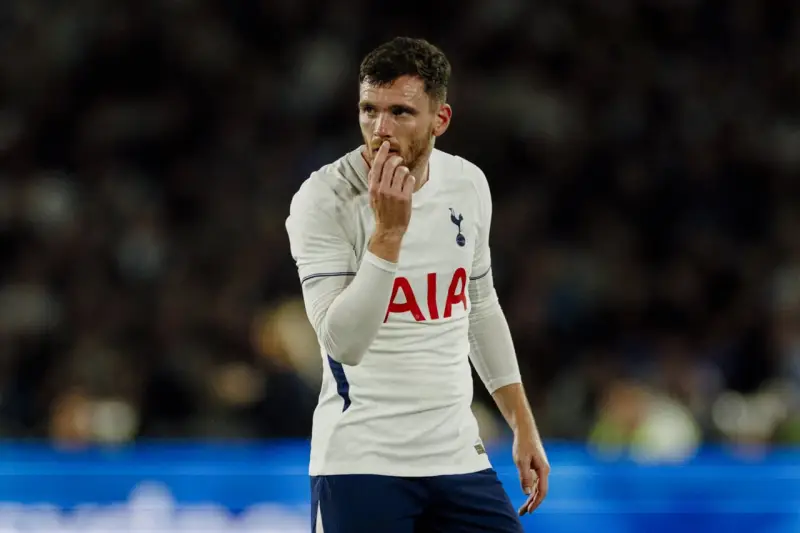
Tottenham’s left side could shape the tactical contest at Stamford Bridge. Destiny Udogie and Andy Robertson are both doubts for Saturday’s meeting with Chelsea, leaving Roberto De Zerbi to weigh five possible answers to a problem that affects both defensive pace and Spurs’ ability to build attacks down the flank.
The stakes are clear. Spurs are seeking back-to-back league wins for the first time this campaign, while Chelsea arrive after beating Bournemouth 5-1 and Everton 2-0 in their last two league matches. Keeping Chelsea’s attack from running into space behind the left-back will matter; Spurs will also need an outlet capable of helping them progress the ball and create chances.
The available information is provisional. De Zerbi’s pre-match press conference is scheduled for Friday afternoon and could clarify the fitness of both players, who may have sustained issues against Coventry City. Until then, the choice comes down to who is fit and which trade-off the coach is prepared to accept.
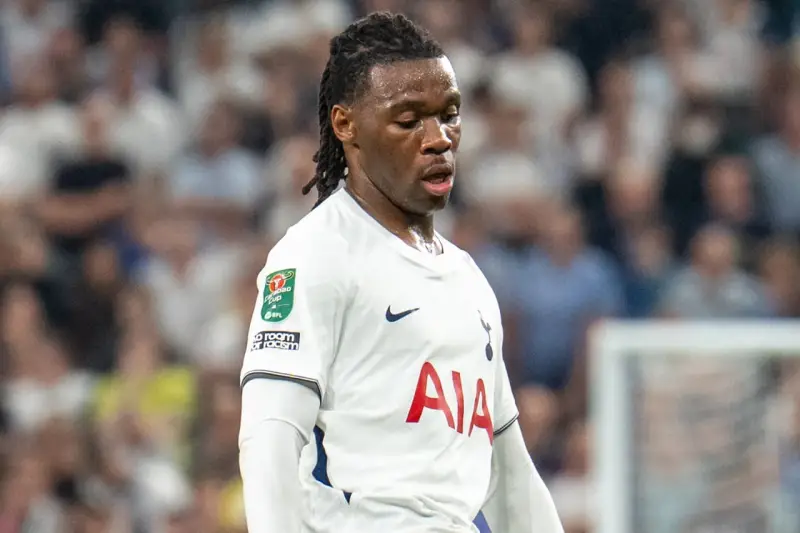
Udogie remains the strongest defensive fit
If Udogie is ready to start, he looks the most natural choice. The left-back has featured in only two league matches this season after a summer in which he was barely involved in Tottenham’s tour of Australia and New Zealand. His last appearance came against Manchester United; a knee problem then kept him out of the Coventry match.
That limited availability makes a return uncertain, but his qualities match the challenge. Udogie offers pace and one-versus-one defending, traits that could help Spurs contain Chelsea’s wide threats and protect the space behind their back line. Against an opponent who have scored seven times across their last two league fixtures, that recovery speed could be particularly valuable.
His return would also let De Zerbi keep the rest of the defensive structure familiar. That matters in a game where Spurs are trying to build on a recent win and need their back line to manage Chelsea’s forward movement without sacrificing their own width. The fitness question comes first, though: a player who has struggled to build rhythm may not be an automatic choice for a demanding away fixture.
Robertson offers the clearest attacking alternative
Should Udogie miss out, Robertson is the straightforward option if he is fit. De Zerbi has already used the former Liverpool defender when Udogie has been unavailable, and Robertson has contributed two assists this season. His delivery and forward movement give Tottenham a proven route to create from the left.
There is a concern to resolve. Robertson was substituted against Coventry after appearing to pick up a muscular problem. De Zerbi has since said the defender is fine, which points towards him being available, but his condition remains a key selection detail. If he can start, Tottenham gain experience and attacking output; if he cannot, the coach will need to turn to a less established solution.
Robertson’s profile changes the left side in a different way from Udogie’s. The pair can both play the position, but Robertson’s two assists underline the creative contribution he can bring. The decision is therefore not simply about replacing one defender with another: it is about balancing fitness, defensive coverage and the supply of chances from wide areas.
Davies brings reliability, with a pace concern
Ben Davies is the next conventional left-back option. When Robertson left the Coventry match with his apparent muscular issue, De Zerbi made a like-for-like change by sending Davies on. The Welshman played roughly 20 minutes, proved dependable and scored Tottenham’s third goal in the match.
That cameo gives Davies a case for selection, especially if both senior alternatives are unavailable. Yet Chelsea’s pace could make this a difficult assignment for him. The prospect of Cole Palmer and Pedro Neto attacking the space behind the full-back is the central tactical concern: if Tottenham’s line is drawn forward, an opponent able to run beyond Davies could force the centre-backs to cover wide areas.
De Zerbi would need to consider how the wider defensive structure could reduce that exposure. Support from the left-sided midfielder or centre-back might help, but committing extra cover could also limit Spurs’ ability to press or break forward. Davies offers dependability and has just shown a goal threat; the matchup, rather than his basic suitability for the position, is the question.
Van de Ven could solve the speed problem
Moving Micky van de Ven to left-back would give Tottenham their quickest defender in that channel. De Zerbi has already tested the idea: when Udogie came off in the 74th minute against Manchester United and Robertson was not on the bench, Van de Ven moved across to left-back.
The positional change is familiar to the defender, who also plays there for the Netherlands. His recovery pace would help Spurs deal with runs in behind, particularly if Chelsea try to isolate their winger against the full-back. It is an option that directly addresses the weakness the coaching staff may fear most in this matchup.
There is a cost elsewhere. Shifting Van de Ven out of central defence would require another centre-back, with Tosin or Marcos Senesi named as possible replacements. That would alter the centre-back pairing and potentially affect the coordination needed to defend Chelsea’s movement through the middle as well as down the flank. De Zerbi would be trading continuity centrally for speed on the left.
Gray gives De Zerbi a flexible option
Archie Gray is the more adaptable alternative. He has started five of Tottenham’s seven matches this season, a clear sign of the trust De Zerbi has placed in the youngster. The coach has also included him in the leadership team, giving Gray a role that extends beyond simply filling a position when needed.
Gray has already played right-back this season, and his experience there suggests he can handle the demands of a defensive role on the flank. He has also featured at left-back in previous seasons, when Ange Postecoglou used him there several times during the 2024-25 campaign. The position is not new to him, even if his main role is in midfield.
Using Gray would preserve Van de Ven in central defence and avoid relying on Davies against Chelsea’s pace. The uncertainty is how the young player’s deployment would affect Tottenham’s balance: moving a midfielder into the back line could change how Spurs progress possession and cover the spaces around him. His five starts in seven matches make the choice credible, but the opponent demands careful attention to his defensive support.
Fitness will decide the shape of the left side
De Zerbi’s options form a clear hierarchy of trade-offs. Udogie appears the strongest defensive fit if his knee problem has eased; Robertson brings two assists and the most direct attacking contribution; Davies offers a reliable like-for-like replacement but may face a pace mismatch. Van de Ven gives the back line extra speed at the cost of a central defensive reshuffle, while Gray offers flexibility and preserves Van de Ven’s place in the middle.
The Friday update on Udogie and Robertson should narrow the decision. If either is ready, De Zerbi can keep the shape more familiar. If both are ruled out, the choice will reveal which risk he considers more manageable: Chelsea’s runs into the channel, changes to the centre-back pairing or the uncertainty of asking Gray to handle the flank. For Spurs, the left-back selection could be a defining part of their attempt to secure consecutive league victories.