Tom Ballantyne’s Hong Kong leap brings a David Silva coaching moment
- Jake Rosengarten
- 564 views
Four weeks after leaving Devonport City, Tom Ballantyne was coaching David Silva at Sha Tin. His route there ran through Australia, England and years of hard work.
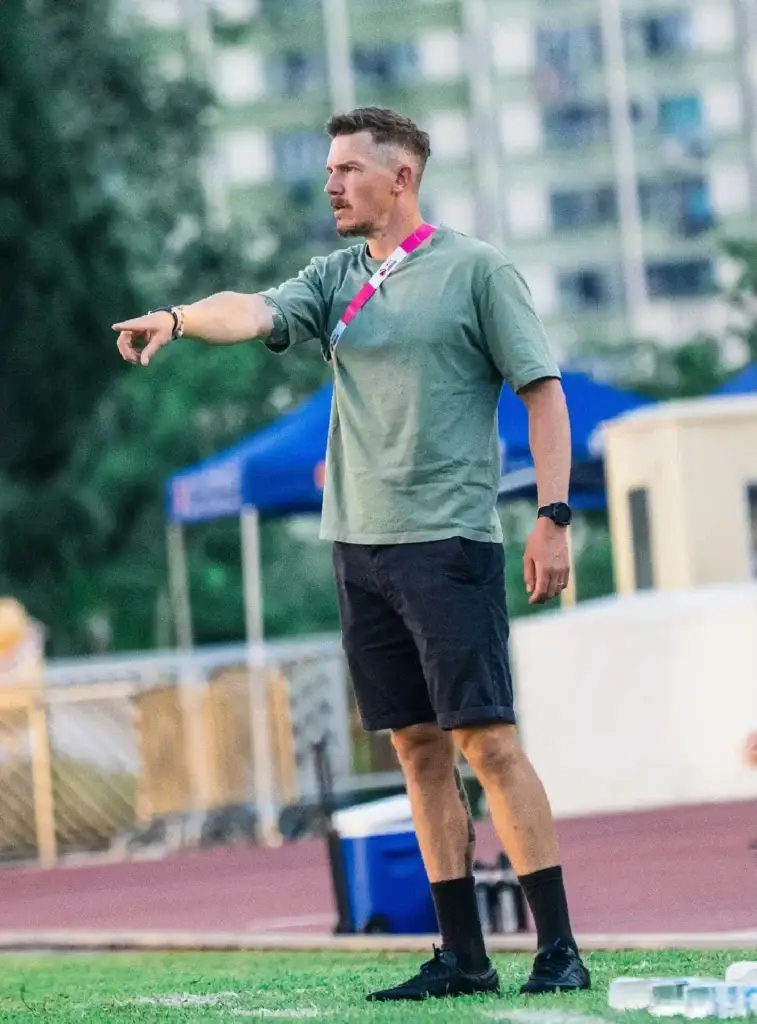
Tom Ballantyne’s first weeks at Supreme Sha Tin delivered a scene few coaching journeys can match: David Silva, back on the pitch after more than three years away, taking instructions from a coach who had only just left Tasmania. Silva’s one-game guest appearance brought international attention to the Hong Kong club—and offered Ballantyne a vivid measure of how far a career built on saying yes had travelled.
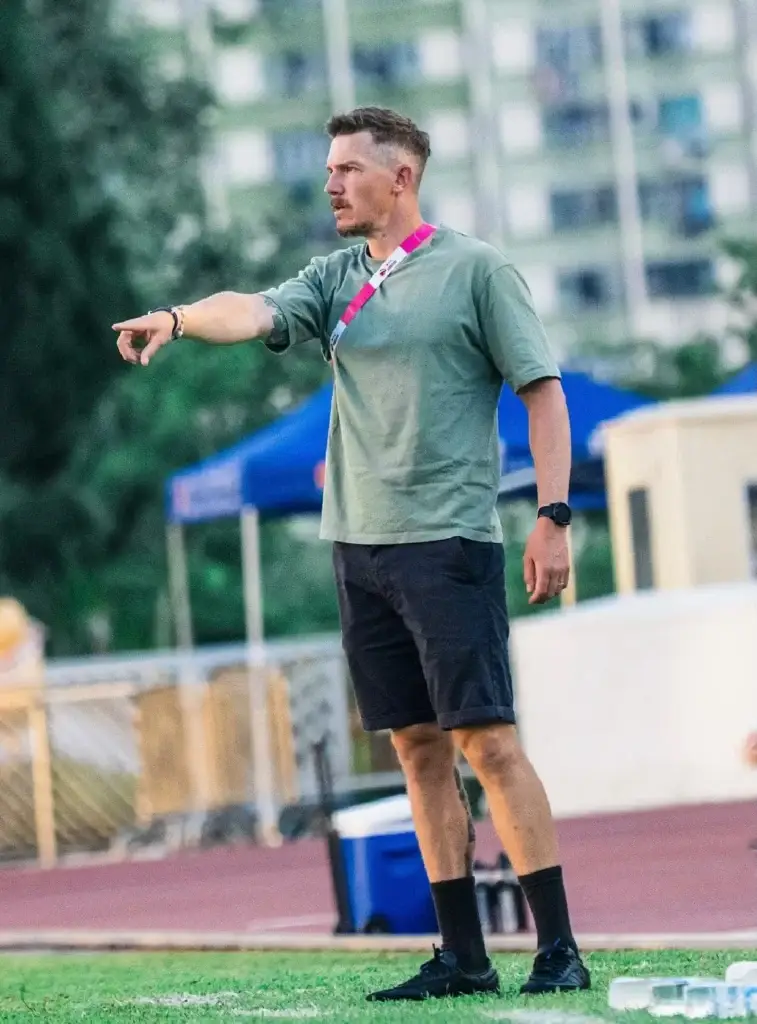
The move came quickly. Ballantyne was watching his son play in a junior tournament when a call arrived asking whether he could interview for the Sha Tin job in about 90 minutes. He was more than an hour from home. He asked his wife to arrange a lift for her and the children, drove back, changed his shirt and made the interview. A follow-up came the next day; within a week, he was on a plane to Hong Kong.
By November 7, Sha Tin’s match against HK Rangers had become a much bigger occasion than a routine league fixture. Silva emerged from retirement for a single guest appearance and scored a penalty. Ballantyne had known before taking the job that Silva might feature, but the scale of the attention still caught him off guard.
“I was semi-prepared, but not quite prepared for how big the occasion ended up being,” he said. For the club, the attention was extraordinary. For Ballantyne, coaching a player whose career included a decade at Manchester City and spells under Roberto Mancini, Manuel Pellegrini and Pep Guardiola was a “pinch-me moment”.
Silva’s quality showed in training
Silva’s influence went beyond the penalty. Ballantyne described him as humble, committed in training and quick to understand Sha Tin’s approach. He also tried to help the younger players around him grasp what the team was working on. The visit was brief, but the standard Silva set was apparent as soon as the ball started moving.
One training sequence stayed with Ballantyne. Silva received possession, turned infield and, as Sha Tin’s striker ran beyond the defence, lifted a pass over two players with just enough backspin for his teammate to run onto it and finish. The reaction around the session was immediate: even after years out of the game, the midfielder’s touch and timing were unmistakable.
Ballantyne said Silva seemed to be processing situations “two, three steps ahead” of most of the players at training, while sharing plenty of information. The coach didn’t have time to pick apart Silva’s tactical thinking during the short visit, but he said conversations about a possible return remain open. Any decision, he added, sits above his level.
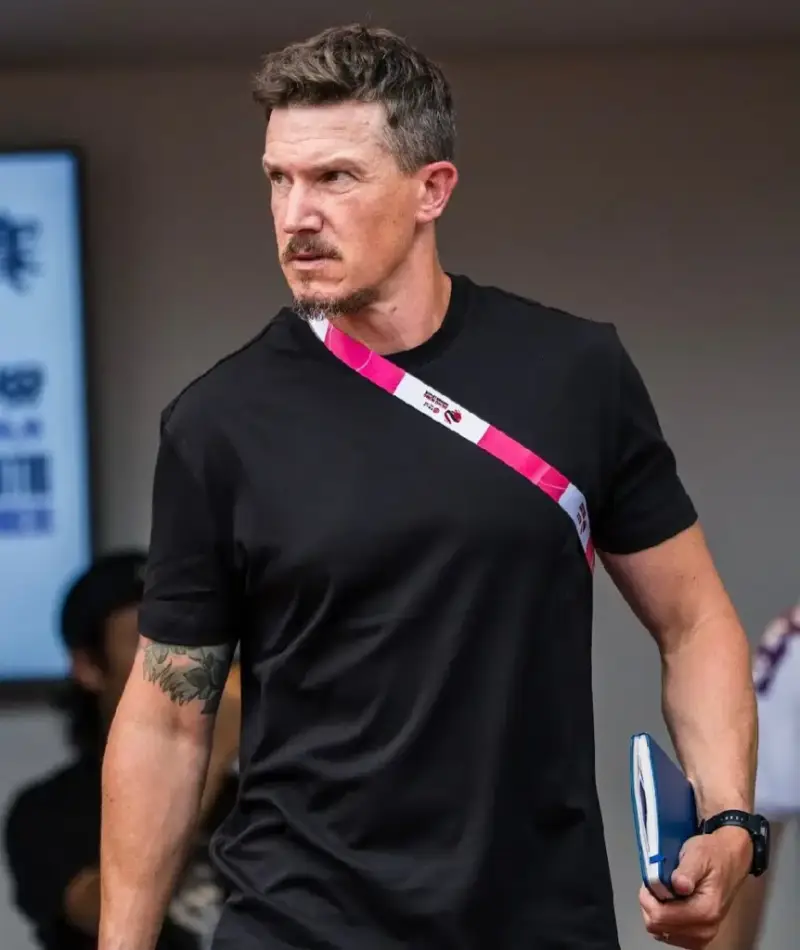
Sha Tin may invite other high-profile guests after the success of Silva’s appearance. Ballantyne said the club sees potential in bringing players back to the game for one-off stints, both for the interest they generate and for the effect they can have on the squad. A guest appearance can put a club in the global spotlight while giving younger players the chance to train and compete alongside an elite performer.
A coaching career built around opportunity
Ballantyne’s route to Sha Tin began with an early end to his playing career. A serious knee injury pushed him towards coaching, and he backpacked around Australia before building experience in England with Aston Villa, Cardiff City and Cheltenham Town. To keep coaching during the day, he took night shifts stacking shelves at a supermarket three times a week.
The schedule was punishing. Ballantyne recalled periods of getting very little sleep, sometimes only an hour, before driving to Birmingham for a Villa session, heading to Cardiff for another, then returning to work that night. His explanation is simple: he wanted to coach as much as possible, and the supermarket shifts paid the rent while leaving his days free.
“Opportunities don’t come around all the time,” he said. “You have to be in a position to say yes.” He looked for ways into sessions, calling coaches to ask if he could watch or help with the equipment. The aim was to learn, meet people in the game and remain available when a role appeared.
That approach shaped a major early choice. Ballantyne had the chance to coach one of England’s national disability teams at Chelsea’s Cobham facility, but instead moved to Australia to work with Adelaide United’s academy. His wife is Australian; after securing a visa, the family relocated at the end of 2011.
He admits to a “mild regret” about not staying in England to see what might have followed. But the 15 years since have taken him through a wide range of Australian football environments and, eventually, to a professional role in Hong Kong. He says he has coached more than 600 or 700 senior matches in Australia and built a family life along the way. The alternative paths are impossible to measure; he doesn’t regret the one he chose.
From Devonport to Hong Kong
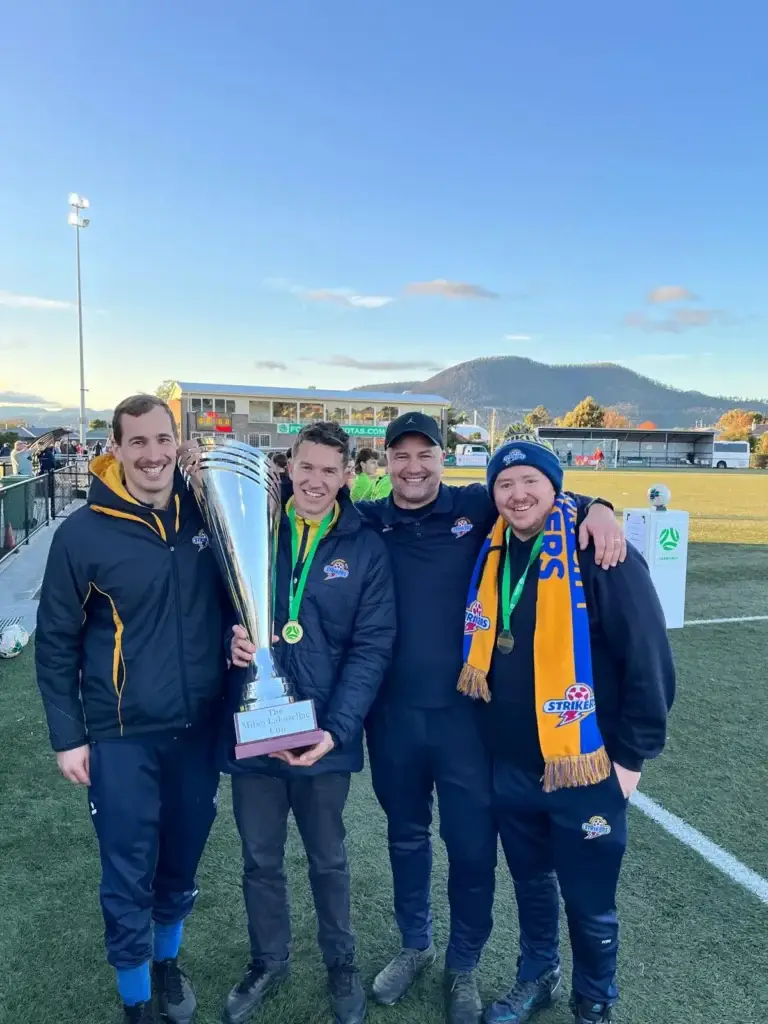
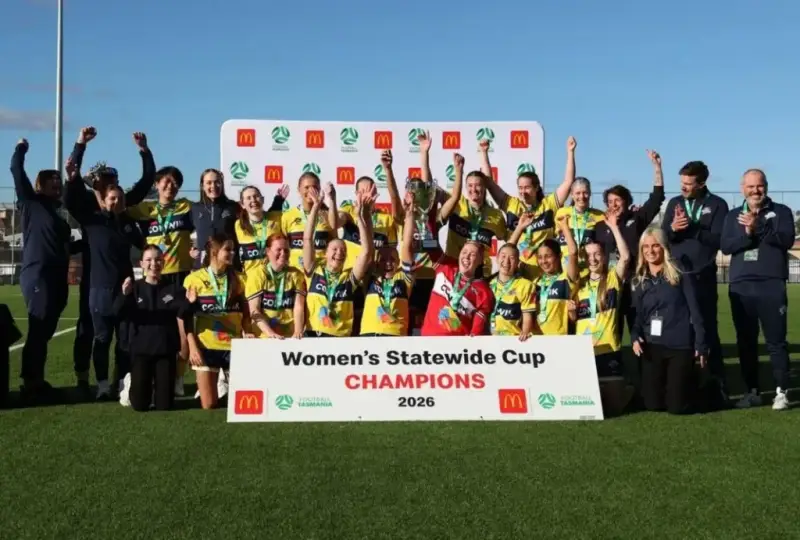
Ballantyne worked across state programs, school teams and clubs, moving through South Australia and Queensland before settling in Tasmania. At Devonport City, where he coached for five years, he left as the most successful manager in the club’s history. His teams won two NPL Tasmania titles and three Women’s Super League titles. Across three seasons with the women’s side, he recorded a 95% win ratio. He departed in September, just weeks before the Hong Kong opportunity came together.
Those experiences helped him adjust to different football cultures. Ballantyne said he was struck by how organised Australian sport was and by the strong winning mentality across its codes. Compared with the UK, where football dominates the sporting conversation, Australia’s mixed-code environment exposed him to different approaches and professional habits. He also found that football varied from state to state, requiring him to adapt to how teams played and how clubs operated.
That range of experience has eased the transition to Hong Kong. Six weeks into the job, Ballantyne described the city’s fully professional top flight as being somewhere between the A-League and the Australian Championship in standard. The climate is another adjustment: sessions need carefully planned drinks breaks and changes to their timing. Communication can also require pauses while a translator passes instructions on to the players.
Still, Ballantyne sees familiar foundations beneath the practical differences. The game retains its basic shape, but sessions and explanations need to fit the conditions and the people in front of him. His work across Australia and England has taught him to make those adjustments without losing sight of what he wants the team to do.
For now, his attention is on Sha Tin. He wants to keep learning, develop his coaching ideas and take the next opportunity when it comes. A future role might bring him back to Australia or take him further across Asia; he is open to either possibility. After a career shaped by quick decisions and long hours, the immediate task is clearer: make the new team his own and build on the momentum created by Silva’s remarkable visit.